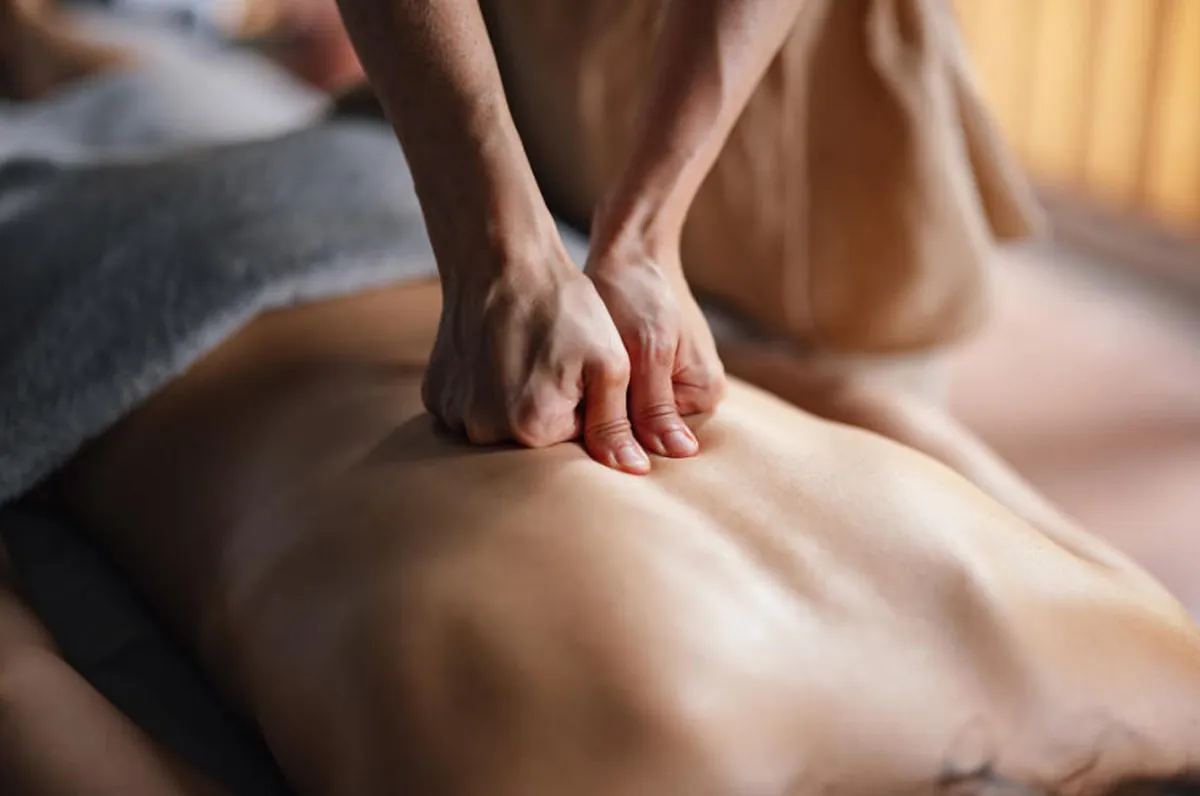
Sustained firm pressure for chronic muscle tension that surface massage doesn't reach. Our most-requested session.
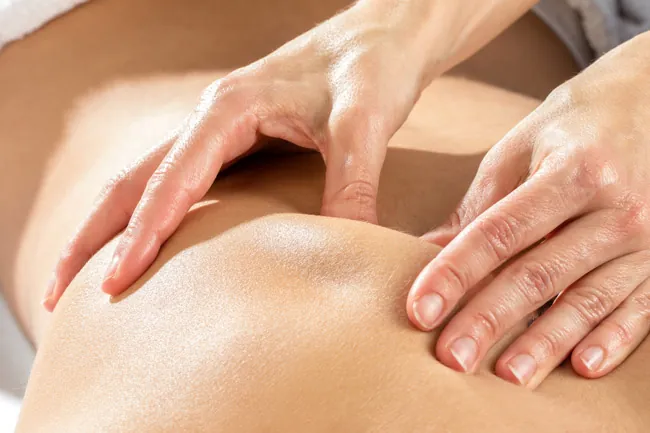
Deep tissue massage in Redwood City is what we get booked for most. The reason is simple: a lot of people are walking around with chronic muscle tension — in the neck, shoulders, lower back, hips — that surface-level massage simply doesn't reach. Deep tissue uses sustained firm pressure to access the deeper muscle layers, the connective tissue underneath, and the trigger points where tension gets locked in.
Our deep tissue work is therapeutic, not punishing. There's a common misconception that "deep tissue" means painful — it doesn't. The skill is in finding the right pressure point, applying steady, controlled force, and letting the muscle release on its own time. Done well, deep tissue feels intense in the moment but leaves you with a profound sense of release afterward. Done poorly, it just bruises you. Our team has the experience to do it well — six of our eight licensed therapists specialize in deep tissue, with a combined 80+ years of practice.
If you've tried "deep tissue" elsewhere and felt like the pressure wasn't actually deep, you're not alone. That's the most common feedback we hear from new clients. Our deep tissue is different. We have the strength and the technique to actually reach the layers that matter — and we'll dial it back the moment you tell us to.
Same low rate as every other modality on our menu.
| Duration | Now | Was | You Save |
|---|---|---|---|
| 30 min | $39 | $59 | $20 |
| 60 min | $59 | $119 | $60 |
| 90 min | Call for Price · 650-868-5088 | ||
| 120 min | Call for Price · 650-868-5088 | ||
Couples sessions: per person, same rate as single service.
FREE 15-min Hot Stone treatment included with any service.
Our clients book this session for a wide range of body issues. The most common reasons:
Years of sitting, lifting incorrectly, or compensating for an old injury. Deep tissue addresses the deeper paraspinal muscles and the gluteal-hip chain that often refers pain forward.
The most-requested area. Massage for chronic neck pain works through the upper trapezius, levator scapulae, and rhomboids — the layers that build up from screen work and stress.
Deep work on the piriformis, gluteus minimus, and lower lumbar can ease nerve compression and reduce sciatic symptoms over a series of sessions.
Massage for frozen shoulder requires patient deep work on the rotator cuff group, deltoid, and surrounding fascia. Range of motion improvements are gradual but real.
Massage for muscle knots and tight muscles is exactly what deep tissue does best — sustained pressure on the hypertonic spot until it releases.
Massage for athletic recovery and sports injury recovery often needs deep tissue's firmer pressure to break up adhesions in overused muscle groups.
Massage for office workers and desk job tension typically focuses on upper back, neck, and chest fascia — all classic deep tissue territory.
Sprains, falls, repetitive strain — deep tissue is the technique for working through years-old scar tissue and restoring tissue mobility.
Skilled deep tissue massage combines several specific techniques. Here's what your therapist will be doing during your session:
Your session begins with a brief consultation: where it hurts, when it started, what aggravates it. The more specific you can be, the better we can target the work.
You'll undress to your level of comfort and lie on the heated table under a sheet. Your therapist will start with broad warming strokes — the muscle has to be warm before deep work begins, otherwise it just guards.
Once the area is warm, the deep work begins. You'll feel sustained pressure on specific points. It might be intense — that's normal. It should never be sharp or stabbing. If it crosses into pain, tell your therapist immediately. The right pressure feels like "hurts so good" — uncomfortable but releasing. The wrong pressure feels like injury.
After deep work on one area, your therapist will smooth out the area with broader strokes before moving on. This helps the muscle settle and prevents the soreness that comes from leaving deeply-worked tissue "raw".
After your session, you may feel a bit of next-day soreness — like the day after a workout. This is normal and means real release happened. Drink plenty of water, take a warm bath if you can, and avoid heavy training for 24 hours.
All eight of our licensed therapists are trained across the full menu. The therapists below have particular depth of experience with deep tissue massage and are most-requested for this service:
Not sure who to book? Tell us where you're holding tension and we'll match you. Find your match by condition →
| Comparison | Notes |
|---|---|
| vs Swedish | Deep tissue uses firm sustained pressure; Swedish uses lighter flowing strokes. Choose deep tissue for pain, Swedish for relaxation. |
| vs Trigger Point | Trigger point is one component of deep tissue work. Standalone trigger point sessions focus only on specific points; deep tissue addresses the whole muscle group. |
| vs Shiatsu | Shiatsu uses thumb and palm pressure along meridian lines — different theoretical framework, but similar firmness. Deep tissue is more anatomically targeted; Shiatsu is more energy-channel focused. |
| vs Sports Massage | Sports massage often blends deep tissue technique with stretching and active engagement, focused specifically on athletic performance and recovery. |
Verdict: If you have specific chronic pain — especially in the lower back, neck, or shoulders — deep tissue is the right starting point. We can also blend deep tissue with acupressure (for our Eastern-trained therapists like Edman and Jack) for a hybrid approach that often works better than pure deep tissue alone for stubborn pain.
It depends on what brings you in. Here are the most common rhythms our clients keep:
Not sure what rhythm makes sense for your situation? Chat with us on the bottom right — we'll talk through it.
The questions our clients ask most often about this service.
Done well, deep tissue feels intense but releasing — what some clients call "hurts so good." It should never feel sharp, stabbing, or like injury. Our therapists adjust pressure constantly based on your feedback. If pressure is too much, just say so — we'll dial it back without breaking the flow of the session.
Deep tissue is the most-requested option for chronic lower back pain at our spa. The sustained pressure releases deeper paraspinal muscles and the gluteal-hip group that surface massage misses. For pain that radiates or feels "stuck," we often recommend combining deep tissue with acupressure — Edman and Jack are especially skilled at this hybrid.
Some next-day soreness is normal and means real release happened. It typically feels like the day after a moderate workout. Drink water, avoid heavy training for 24 hours, and a warm bath helps. Soreness should resolve in 1-2 days. If it lasts longer or feels sharp, let us know.
If you have an active flare-up, once a week for 3-4 weeks usually resolves it. For ongoing chronic issues, every 2 weeks is a common maintenance rhythm. For general muscle tension prevention, once a month works well for most people.
Six of our eight therapists specialize in deep tissue. For the deepest pressure with the most experience, book Edman (30 years, Eastern training) or Jack (20+ years, tuina background). For strong pressure with a focus on oil release, Anna and Peter are popular choices. Leo is versatile and works well for first-time deep tissue clients.
Yes — deep tissue work on the piriformis, gluteus minimus, and lower lumbar area can reduce nerve compression and ease sciatic symptoms. A series of 4-6 weekly sessions usually shows clear improvement. We always recommend coordinating with your physician for any ongoing nerve pain.
60-min sessions from $59 (regularly $119). All sessions by appointment. Eight licensed therapists. Open daily 9am–10pm.
Call: 650-868-5088 Or chat with us on the bottom right →