
Massage for Chronic Neck Pain — What Actually Works
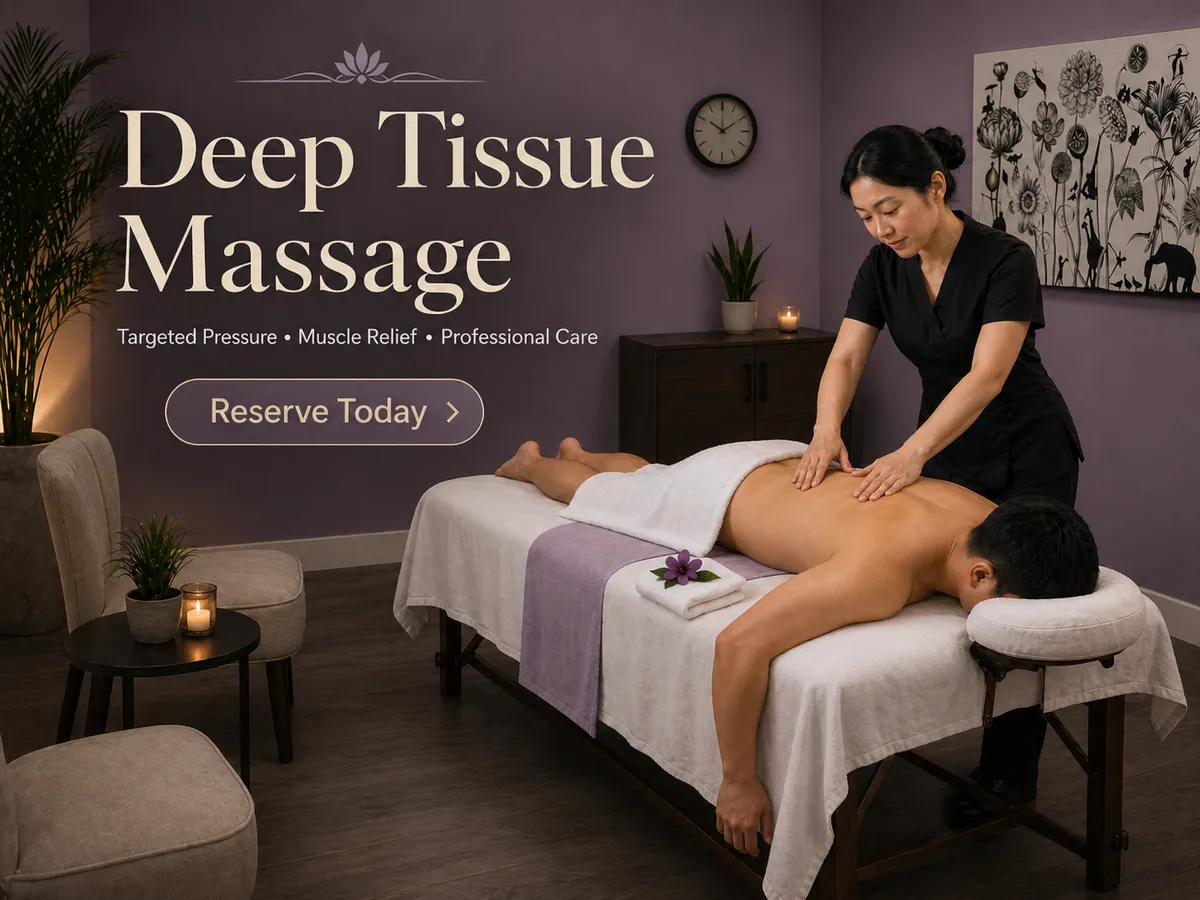
Chronic neck pain is one of the most common reasons clients book a therapeutic massage in Redwood City. Here's what works, what doesn't, and how to choose the right technique.
Why Neck Pain Becomes Chronic
Most chronic neck pain doesn't come from a single injury. It comes from years of accumulated tension — usually a combination of forward head posture (looking at screens), upper trapezius tightness from carrying stress, and weak deep neck flexor muscles that allow the surface muscles to overwork. Over time, the upper trapezius, levator scapulae, suboccipital muscles, and rhomboids all build up layers of tension that ordinary stretching can't release.
The pattern is so common that we see it in almost every client who comes in with chronic neck pain. The desk worker, the parent constantly looking down at a child, the driver who spends hours in traffic, the student bent over books — all develop the same forward-head, rounded-shoulder, locked-trapezius pattern.
The Three Massage Techniques That Actually Help
Deep Tissue Massage addresses the layered tension directly. Sustained firm pressure on the upper trapezius, levator scapulae, and rhomboids releases what surface massage doesn't reach. Most clients feel meaningful improvement after 2-3 weekly sessions. The pressure isn't aggressive — it's sustained and controlled, allowing the muscle to release at its own pace.
Acupressure addresses specific points where neck tension locks in. The suboccipital muscles at the base of the skull, the points along the upper trapezius, and corresponding points on the hands often unlock tension that deep tissue alone doesn't reach. For tension headaches that come along with neck pain, acupressure is often the most effective single approach.
Shiatsu combines elements of both — sustained meridian pressure that targets neck and shoulder tension through the gallbladder and bladder energy channels in classical Eastern medicine. The pace is slower; the work is methodical.
What About Surface Massage?
Light Swedish massage can help with mild neck stiffness from sleeping wrong or a stressful day. For chronic, recurring neck pain that's been there for months or years, surface work isn't enough. You need pressure that reaches the deeper layers — and a therapist who knows where that tension actually lives.
This is the most common mistake we see: clients with chronic neck pain booking Swedish (because they're nervous about deep tissue) and walking away disappointed that their pain wasn't addressed.
How Often Should You Book?
For active chronic neck pain, weekly sessions for 4-6 weeks is the standard recommendation. After the initial pattern resolves, every 2-3 weeks for maintenance. Many clients eventually settle into a monthly rhythm once the issue is well-managed.
Smaller, more frequent sessions are dramatically more effective than rare emergency visits. If you've been dealing with neck pain for months, don't expect a single 60-minute session to fix it — but you'll likely feel meaningful improvement after the first session, with cumulative benefit over the series.
Which Therapist Should You Book?
For chronic neck pain at Redwood Health Center, our most-requested therapists are Edman (30 years, Shanghai TCM training), Jack (20+ years, Chinese tuina background), and Leo (10+ years, multi-technique). All three blend deep tissue with acupressure for stubborn neck tension. Peter is also a strong choice for clients who want firm pressure work.
When to See a Doctor Instead
Massage is not a substitute for medical evaluation. If your neck pain involves: numbness or tingling in the arms, severe headaches, dizziness, recent trauma, or sharp electrical-feeling pain — see a physician first. Massage is supportive care, not diagnosis. Once you've been cleared by a physician, regular massage can be an excellent part of recovery.
The Anatomy of Chronic Neck Pain — What's Actually Tight
To understand why some massage techniques work better than others for chronic neck pain, it helps to know which muscles are actually involved. Most chronic neck pain involves tension in five specific muscle groups, often working together in a layered pattern of dysfunction.
The upper trapezius is the most visible — the muscle running from the base of the skull down to the shoulder. When chronically tight, it creates that "I'm carrying the weight of the world" feeling and contributes directly to tension headaches. The levator scapulae sits underneath, attaching from the upper neck vertebrae to the shoulder blade. When it's tight, you'll feel pain when you turn your head sideways.
Behind the neck, the suboccipital muscles are tiny but enormously consequential. They sit at the base of the skull and are responsible for fine head positioning. Modern screen use has them in chronic overuse for almost everyone — and they refer pain over the top of the head and behind the eyes, often confused with headaches.
The scalenes on the front and side of the neck are often forgotten. When tight, they can compress the nerves traveling to the arm, creating numbness or tingling that gets misattributed to other causes. Skilled deep tissue work on the scalenes (gentle, given the proximity to nerves and blood vessels) often resolves arm symptoms that other treatments miss.
Finally, the sternocleidomastoid (SCM) — the rope-like muscle visible on the side of the neck — refers pain to the face, ear, and jaw. SCM tension contributes to TMJ symptoms in many clients.
An experienced therapist works through this layered system in sequence — surface layer first (upper trapezius), then deeper (levator, scalenes, SCM), then the precision points (suboccipital). Skipping layers is what makes some sessions feel temporary and others lasting.
What Doesn't Work for Chronic Neck Pain
A few approaches we frequently see that don't actually help:
Stretching alone. Stretching a chronically tight muscle without releasing the underlying restriction is like trying to lengthen a knotted rope by pulling its ends. It might feel better briefly but the knot doesn't change. Stretching is most effective after the manual release work — keeping the new range of motion accessible.
Heating pads alone. Heat helps temporarily — the warmth relaxes the muscle and improves local circulation. But heat doesn't release adhesions; it just makes them less symptomatic. The relief lasts hours, not days.
Ergonomic adjustments alone. Better chair, better screen height, better posture awareness — all valuable. But if you've been holding the pattern for years, the muscles don't release just because the input changes. You need direct work to undo what's already there.
What works is the combination: manual release work to undo the existing pattern, plus stretching/movement/posture changes to prevent it from coming back. Massage is the lever that makes the other interventions work.
How a Series of Sessions Actually Resolves the Pattern
For chronic neck pain that's been there for months or years, a single session is rarely enough to create lasting change. The body's pattern is reinforced by every day of normal use; reversing it takes consistent input.
Here's what a typical resolution looks like in our clients:
Session 1: Therapist identifies the layered pattern. Works the surface tension. Most clients feel meaningful relief by the end of the session, and continued improvement over the next 24-48 hours. By day 4-5, much of the original tension has returned — but the body knows what release feels like.
Session 2 (1 week later): The starting pattern is slightly less locked than the first session. Deeper work is possible. Relief lasts a bit longer.
Session 3 (1 week later): Significant cumulative shift. The therapist can reach deeper layers. Range of motion noticeably improved.
Session 4-6 (weekly): Pattern resolution. The chronic pain that brought the client in is now gone or dramatically reduced. Clients usually shift to bi-weekly maintenance.
Beyond: Most clients settle into bi-weekly or monthly rhythm to prevent recurrence. A flare-up triggered by stress or unusual physical demand resolves in 1-2 sessions rather than weeks.
Practical Logistics for Booking Your Session
For clients ready to act on what's described above, the practical mechanics of working with us:
Phone booking: 650-868-5088. Available all open hours (9am to 10pm, every day). The receptionist will take you through service selection, therapist matching, and scheduling. Most calls take 3-5 minutes.
Chat booking: Bottom right of any page on our website. Available 24/7. Useful when you have specific questions or want to describe a complex issue before committing to a session. Response time during open hours is usually under 5 minutes.
Same-day appointment: Sometimes possible. Our therapists are typically booked, but if there's an opening we can fit you in. Call ahead to check.
Same-day vs advance booking: Same-day works for most weekday slots. Friday evenings and weekend slots fill 2-3 days ahead. The most-requested therapists (Edman, Jack) often book a week ahead during busy periods.
What to bring: Nothing required. Comfortable clothes for arrival and departure. We provide everything else — sheets, oils, robes, water.
Your First 60 Seconds With the Therapist
The brief consultation at the start of every session is more important than most clients realize. The therapist is making rapid assessments based on what you tell them and what they observe. The clearer you are in those first 60 seconds, the more targeted the work will be.
The questions worth answering specifically:
- Where exactly is the issue? "My neck" is vague. "The right side of my upper trapezius, just above the shoulder blade" is specific.
- How long has it been there? "A week" requires a different approach than "three years."
- What aggravates it? Specific positions, specific activities, specific times of day.
- What relieves it (even temporarily)? This tells the therapist what kinds of input the body responds to.
- Anything to avoid? Recent injuries, areas of skin sensitivity, areas you don't want worked on for any reason.
- What's the goal? Pain relief? Relaxation? Recovery? The session shape changes based on which.
What Tells You the Session Worked
The honest indicators that a session was effective:
In the first hour after: A quiet, slightly slow feeling. Reluctance to immediately return to busy activity. Mild thirst.
That night: Better sleep. Falling asleep faster. Waking less. Sleeping through usual disruptions.
The next morning: Better range of motion than yesterday. The chronic pain or tension you came in with is at minimum reduced — often noticeably less.
Day 2: Possibly mild soreness if you had deep work, similar to the day after a workout. Drink water; it resolves quickly.
Day 3-5: The cumulative benefit. Many clients report feeling better than they did before the session — calmer, more flexible, sleeping better.
If you notice none of these in the days after a session, the work didn't fully connect with what your body needed. That's useful feedback. Tell us at your next appointment so we can adjust technique, therapist match, or both.
Why Consistency Matters More Than Intensity
If we could give one piece of advice to every client about therapeutic massage, it would be this: consistency dramatically outperforms intensity. Two 60-minute sessions per month for a year does more for chronic conditions than a single dramatic 120-minute session per quarter.
The body learns from repeated input. A consistent rhythm of moderate sessions teaches the nervous system and the tissue that release is the new normal. A rare, dramatic session creates a temporary peak that fades back to baseline.
This is why we don't sell prepaid packages with expiration dates — we want clients booking when their bodies need it, not booking 10 sessions in 30 days because the package is expiring. The right rhythm is whatever you can sustain over time.
For most clients, that turns out to be every 2-3 weeks. For some, weekly. For others, monthly. The right answer is whatever you'll actually keep doing.
Ready to Book?
Read more on our blog or check out our complete guide to massage in Redwood City.
Call: 650-868-5088