
How to Choose a Massage Therapist
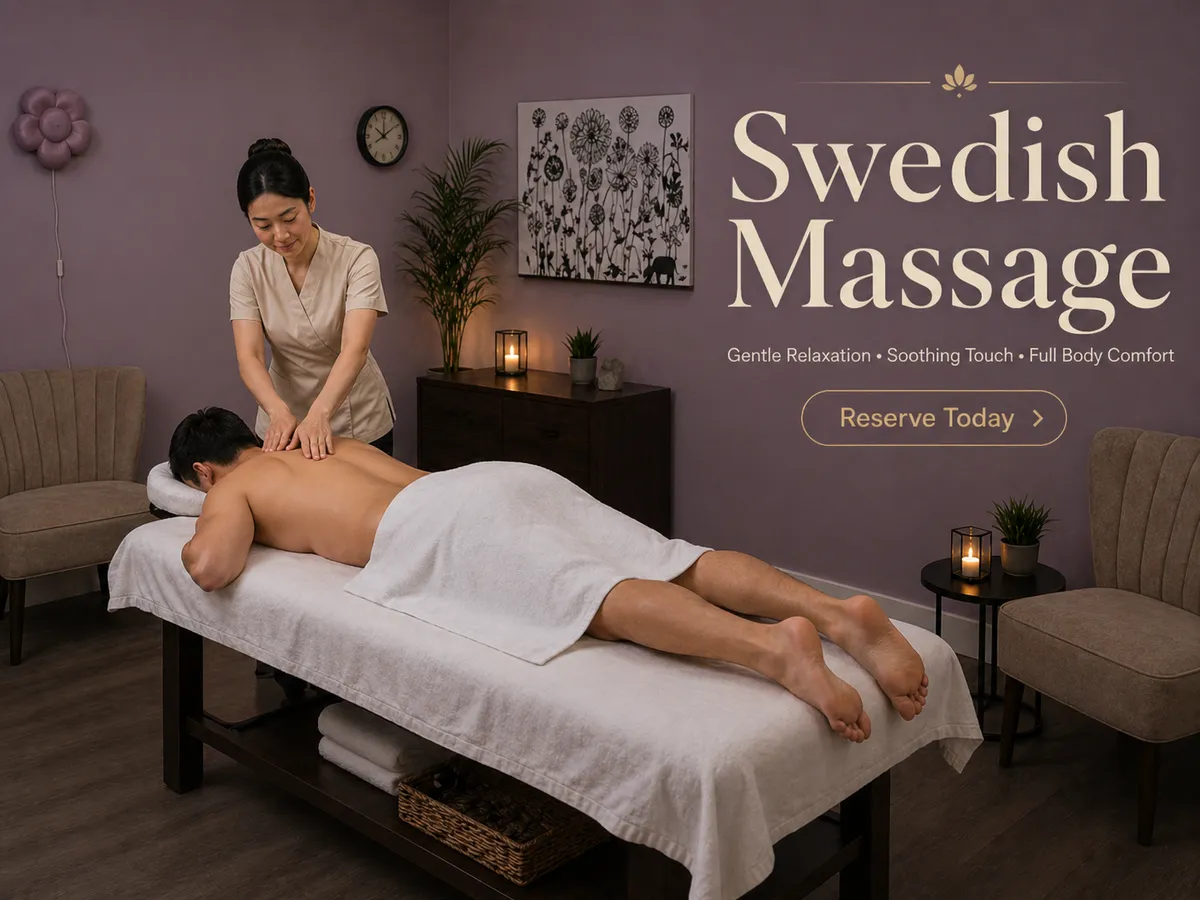
The therapist matters as much as the technique. Here's how to find the right match without bouncing from spa to spa.
Why Therapist Choice Matters More Than You Think
Two therapists doing the same "deep tissue massage" can deliver completely different sessions. Pressure, pace, technique, point selection, and experience all vary enormously. Choosing the right therapist is often more important than choosing the right technique.
Clients who bounce from spa to spa looking for "the right massage" are usually really looking for the right therapist. The technique can be similar across spas; the practitioner makes the difference.
Years of Practice — But Not Just Any Years
Look for at least 5+ years of full-time practice. Therapists with 10+ years have seen far more bodies. Therapists with 20+ years have an instinct that's almost diagnostic. But: a therapist who has done part-time work for 15 years is roughly equivalent to one who has done 5 full-time. Look for full-time experience.
At our spa, our most experienced therapist Edman has been practicing for 30 years, with formal training at Shanghai University of TCM. Jack has 20+ years in Chinese tuina and bone-setting. The other six therapists each have 8-10+ years of dedicated practice.
Specific Specialty
Most experienced therapists focus on specific areas. Some are pain-relief specialists; some are relaxation experts; some focus on athletic recovery; some on Eastern modalities. A pain-relief specialist won't give you the best relaxation session; a relaxation specialist won't fix your chronic neck issue.
When you call a spa, ask: "Which of your therapists specializes in [my specific issue]?" If the answer is "all our therapists are great at everything," be a little skeptical. The best therapists usually have a focus area.
Training Lineage Matters
Western therapeutic massage and Eastern bodywork (Shiatsu, tuina, traditional Chinese medicine) are different traditions. They use different frameworks. If you've found Western massage limited for your chronic issue, a therapist with formal Eastern training often catches what others miss.
This is one reason we hired both Eastern-trained therapists (Edman, Jack) and Western-trained therapists. For some conditions, Western anatomical thinking is the right framework. For others, the Eastern meridian approach reaches what Western work doesn't.
Communication Style
Some therapists work in silence; some explain as they go; some ask frequent feedback. None is "right" — but they suit different clients. Match the style to your preference.
First-time clients often appreciate the explainer-style; longtime regulars often prefer the silent type. For chronic pain work, a therapist who checks in periodically about pressure and discomfort is often the right choice.
Questions to Ask Before You Book
When calling a new spa, here are the questions worth asking:
- What's your specialty?
- How many years of full-time practice?
- Have you worked with [my specific issue] before?
- Do you typically blend techniques or stick to one?
- What pressure level are you most comfortable with?
Red Flags
- A therapist who promises specific medical outcomes ("I'll fix your sciatica in one session")
- A therapist who can't give a clear answer about their training
- A therapist who pushes packages or upgrades
- A therapist who doesn't ask about your health history before starting
- A spa where you can never request the same therapist twice (suggests high turnover)
The Eight Types of Massage Therapists You'll Encounter
Therapists develop styles over years of practice. Recognizing the type helps you match expectations to reality.
The Pain-Relief Specialist. Confident with chronic pain. Comfortable with firm pressure. Specific in technique. Less interested in pure relaxation; more interested in therapeutic outcomes. Best for clients with specific issues.
The Relaxation Expert. Smooth, intuitive flow. Gentle pace. Focus on the nervous system rather than specific muscle work. Best for clients seeking stress relief and overall calm.
The Eastern Practitioner. Trained in tuina, Shiatsu, or traditional Chinese medicine. Thinks in meridians and energy patterns rather than muscle groups. Often catches what Western therapists miss for chronic conditions.
The Sports Specialist. Focus on athletes and active clients. Comfortable with deep pressure, stretching, and recovery-focused work. Often combines techniques. Knows muscle anatomy in detail.
The All-Around Therapist. Equally comfortable across modalities. Adapts to whatever the client needs. Less specialized but more flexible. Best for clients whose needs vary visit to visit.
The Mindbody Practitioner. Integrates emotional and somatic awareness. Skilled at noticing where stress and trauma live in the body. Best for clients whose physical symptoms are tied to emotional patterns.
The Senior Therapist. 20+ years of practice. The work has an almost diagnostic quality — they read the body's history through their hands. Pricing often higher; experience justifies it.
The Newer Therapist. 1-3 years of practice. Earnest, attentive, often trying multiple techniques. Great value, with the trade-off of less pattern recognition. A good fit for relaxation work; less ideal for complex chronic conditions.
How Long Should You Stay With One Therapist?
Massage works best as a relationship, not transactions. A therapist who has worked on you 5+ times has built a mental map of your body's patterns — what's chronic, what's new, what responds, what doesn't. That accumulated knowledge makes each subsequent session more efficient.
The general rule: stick with a therapist as long as the work is delivering. If after 3-4 sessions you're not seeing meaningful improvement on the issues that brought you in, try a different therapist (not necessarily a different spa). The match is a real factor.
Loyalty isn't a virtue here. If a therapist's style doesn't suit your body, no amount of repeated sessions will change that. A good therapist won't be offended if you switch — they want you to find what works.
Red Flags to Watch For
Things that should make you reconsider a therapist or a spa:
- Promises of specific medical outcomes ("I'll fix your sciatica in one session")
- Pressure to buy package deals or upgrades
- Vague answers about training or experience
- Therapist who doesn't ask about health history before starting
- Unprofessional draping (not keeping covered areas covered)
- Therapist who continues pressure after you've asked to lighten it
- Spa that won't let you book the same therapist twice (suggests high turnover)
- Spa with no online presence or no information about therapists
Questions to Ask in Your First 5 Minutes
Before the session begins, in the consultation, ask these:
- "How many years have you been doing this full-time?"
- "What's your specialty?"
- "Have you worked with [my specific issue] before?"
- "What technique would you recommend for what I described?"
- "How will we know if it's working?"
The answers tell you a lot. A confident, experienced therapist gives clear specific answers. A less experienced or less confident one gives vague reassurances.
Practical Logistics for Booking Your Session
For clients ready to act on what's described above, the practical mechanics of working with us:
Phone booking: 650-868-5088. Available all open hours (9am to 10pm, every day). The receptionist will take you through service selection, therapist matching, and scheduling. Most calls take 3-5 minutes.
Chat booking: Bottom right of any page on our website. Available 24/7. Useful when you have specific questions or want to describe a complex issue before committing to a session. Response time during open hours is usually under 5 minutes.
Same-day appointment: Sometimes possible. Our therapists are typically booked, but if there's an opening we can fit you in. Call ahead to check.
Same-day vs advance booking: Same-day works for most weekday slots. Friday evenings and weekend slots fill 2-3 days ahead. The most-requested therapists (Edman, Jack) often book a week ahead during busy periods.
What to bring: Nothing required. Comfortable clothes for arrival and departure. We provide everything else — sheets, oils, robes, water.
Your First 60 Seconds With the Therapist
The brief consultation at the start of every session is more important than most clients realize. The therapist is making rapid assessments based on what you tell them and what they observe. The clearer you are in those first 60 seconds, the more targeted the work will be.
The questions worth answering specifically:
- Where exactly is the issue? "My neck" is vague. "The right side of my upper trapezius, just above the shoulder blade" is specific.
- How long has it been there? "A week" requires a different approach than "three years."
- What aggravates it? Specific positions, specific activities, specific times of day.
- What relieves it (even temporarily)? This tells the therapist what kinds of input the body responds to.
- Anything to avoid? Recent injuries, areas of skin sensitivity, areas you don't want worked on for any reason.
- What's the goal? Pain relief? Relaxation? Recovery? The session shape changes based on which.
What Tells You the Session Worked
The honest indicators that a session was effective:
In the first hour after: A quiet, slightly slow feeling. Reluctance to immediately return to busy activity. Mild thirst.
That night: Better sleep. Falling asleep faster. Waking less. Sleeping through usual disruptions.
The next morning: Better range of motion than yesterday. The chronic pain or tension you came in with is at minimum reduced — often noticeably less.
Day 2: Possibly mild soreness if you had deep work, similar to the day after a workout. Drink water; it resolves quickly.
Day 3-5: The cumulative benefit. Many clients report feeling better than they did before the session — calmer, more flexible, sleeping better.
If you notice none of these in the days after a session, the work didn't fully connect with what your body needed. That's useful feedback. Tell us at your next appointment so we can adjust technique, therapist match, or both.
Why Consistency Matters More Than Intensity
If we could give one piece of advice to every client about therapeutic massage, it would be this: consistency dramatically outperforms intensity. Two 60-minute sessions per month for a year does more for chronic conditions than a single dramatic 120-minute session per quarter.
The body learns from repeated input. A consistent rhythm of moderate sessions teaches the nervous system and the tissue that release is the new normal. A rare, dramatic session creates a temporary peak that fades back to baseline.
This is why we don't sell prepaid packages with expiration dates — we want clients booking when their bodies need it, not booking 10 sessions in 30 days because the package is expiring. The right rhythm is whatever you can sustain over time.
For most clients, that turns out to be every 2-3 weeks. For some, weekly. For others, monthly. The right answer is whatever you'll actually keep doing.
Ready to Book?
Read more on our blog or check out our complete guide to massage in Redwood City.
Call: 650-868-5088