
What to Expect at Your First Massage
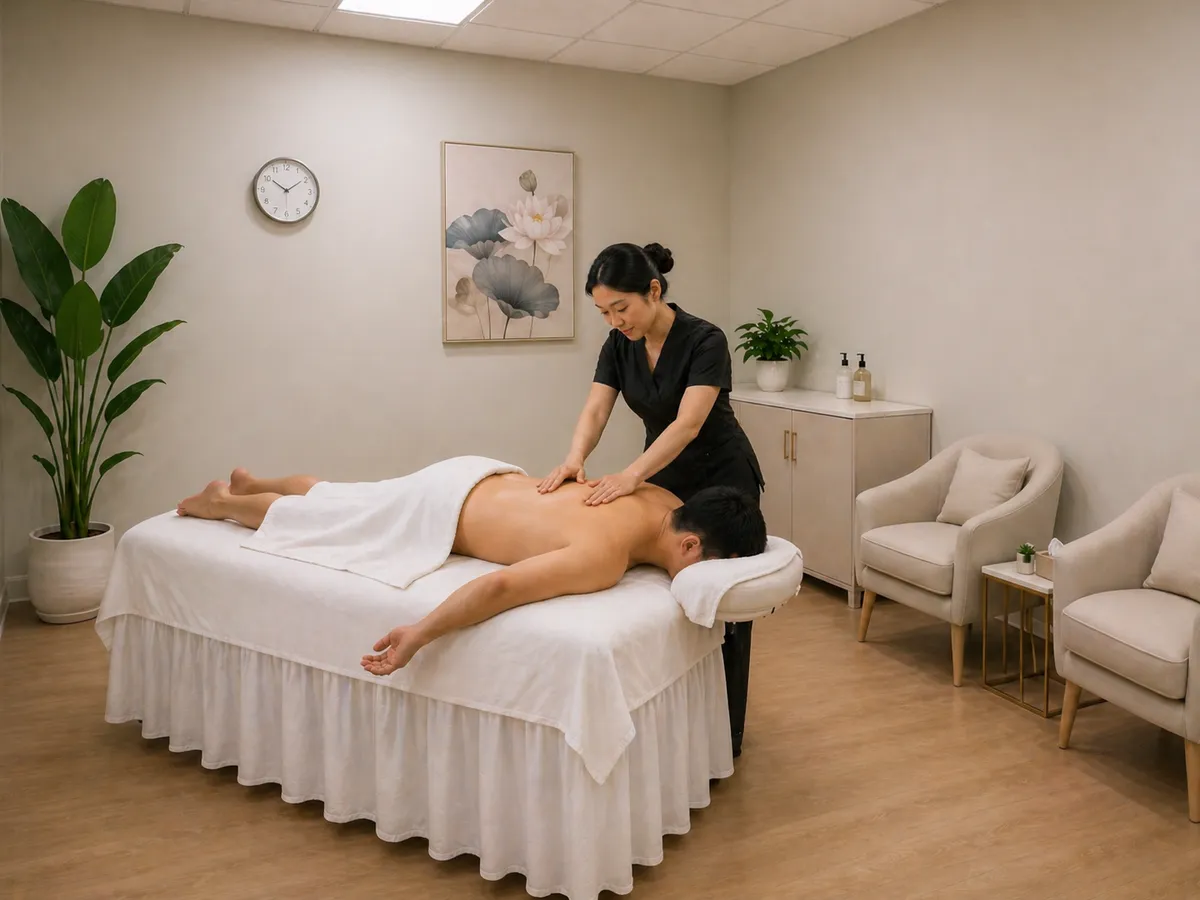
Never had a professional massage? Here's exactly what to expect, with honest answers to the questions first-timers usually feel awkward asking.
The Stuff First-Timers Are Actually Worried About
Most first-time clients have the same questions but feel awkward asking them. So we'll answer the awkward ones directly:
Do I have to be naked? No. You undress to your level of comfort. Most clients undress fully and rely on the sheet (which always covers what isn't being worked on). Some clients keep underwear on. Some clients keep shorts on. All of it is fine.
What if I get nervous? Tell your therapist. They've heard it before. Massage works best when you're relaxed; if you're tense from nervousness, the therapist will adjust the approach.
What if I fall asleep? Many people do. It's a sign you're truly relaxed. Your therapist won't take it personally.
Before Your Appointment
Hydrate. Drink plenty of water the day before and the morning of. Hydrated muscle releases more easily.
Don't eat a heavy meal beforehand. Light food is fine; full stomach makes lying face-down uncomfortable. Aim for 2 hours between a big meal and your session.
Avoid alcohol. Alcohol dehydrates and can intensify the lightheaded feeling some clients have after deep work.
Shower if you can. Not required, but most clients feel more comfortable starting clean.
Arrival and Check-In
Plan to arrive 5 minutes early. Use the bathroom (you don't want to interrupt mid-session). Take off your watch and any jewelry that might dig in.
At the front desk you'll fill out a brief intake form — health conditions, recent injuries, what you'd like out of the session. Be thorough. The more your therapist knows, the better they can help.
The Consultation
Your therapist will spend 3-5 minutes asking specifically about: where you hold tension, when it started, what makes it worse, what you've tried before, any allergies (in case oils are used), and any areas to avoid.
Be specific. "My neck hurts" is less useful than "I have tightness on the right side of my upper trapezius and a tension headache that comes from there about 3 days a week." The more specific the better.
Undressing and Getting on the Table
Your therapist will leave the room while you undress. Lie face-down on the heated table under the sheet (or face-up if instructed). Place your face in the cradle (the padded ring at the head of the table) so you can breathe normally. Your therapist will knock and come in when you're ready.
If you're cold, ask for an extra blanket. If the music is too loud or too quiet, ask. Comfort matters.
During the Session
Your therapist will use sheet draping to keep covered areas covered. Only the area being worked on is exposed at any given time.
Speak up about pressure. If pressure is too much, say so. If it's too light, say so. A skilled therapist will adjust without breaking the flow.
Let your weight settle. First-timers often hold their muscles tight, trying to "help." The work goes better when you let your weight relax into the table.
Breathe normally. Don't hold your breath when pressure increases. Breathe through it; the muscle releases more easily.
After the Session
Your therapist will leave the room. Take your time getting up — too fast can make you lightheaded.
Drink water. Most clients describe a quiet, slightly slow feeling for the first 20-30 minutes. That's normal and good. The benefits of the session continue to develop for 24-48 hours afterward.
If you had deep work, expect possible mild soreness the next day — like the day after a workout. Drink water, take a warm bath, avoid heavy training for 24 hours.
The Awkward Questions, Answered Plainly
First-timers often have questions they feel awkward asking out loud. The honest answers:
"What if my body is unusual in some way I'm self-conscious about?" Therapists work on bodies all day. Whatever you think makes your body unusual, they've seen it — and significantly more unusual variations. Stretch marks, scars, body hair, weight, body shape, skin conditions — none of it is remarkable to a therapist. They're focused on muscle and tissue, not aesthetics.
"What if I feel turned on?" Occasionally happens, especially in younger clients new to massage. The body's response to nervous-system activation can include things like blood flow changes that aren't sexual but might feel that way. It's a non-issue. Therapists are professionals; they ignore it. If it actively distresses you, you can mention it and the therapist will adjust pace and pressure to dial back the parasympathetic activation.
"What if I have to fart?" Massage activates the digestive system (parasympathetic state). Mid-session digestion is normal. Therapists don't react. If you need to step out to use the bathroom, just ask — they'll step out of the room and you can use the facilities.
"What if I cry during the session?" Massage releases held emotional tension as well as physical tension. Some clients have moments of unexpected emotion mid-session. Therapists are familiar with this. They'll often simply pause, give you space, and continue when you're ready.
"What if the therapist sees my [scar/condition/feature] and judges me?" They don't. The professional headspace of an experienced therapist is "what's the muscle pattern here, how do I work this body." Personal judgments aren't part of it.
Logistical Things You Might Not Know to Ask
The face cradle. The ring at the head of the table that you put your face in for face-down work. It's surprisingly comfortable but takes a moment to position correctly. The therapist will help adjust it. If your nose is squished or your neck is angled wrong, ask them to readjust — it makes a real difference for a 60-minute session.
The bolster. The small cylinder pillow placed under your ankles when face-down, or under your knees when face-up. It takes pressure off the lower back. If you feel any pressure or pulling in your back, ask for a different bolster setup.
Heated tables. Most professional tables are heated. The temperature is comfortable but adjustable — if you're cold, ask for an extra blanket. If you're warm, ask for the heat to be turned down.
Music. Most spas play soft instrumental music. If it's too loud, too quiet, or not your style, you can ask for it to be adjusted. Some clients prefer silence; if you do, just ask.
Bathroom. Use it before your session. If you need to go mid-session, just say so — the therapist will step out, you put on the robe (provided in the room), use the bathroom, return to the table.
Clothing storage. There's typically a hook or chair in the treatment room for your clothes. Bring nothing precious that you'd worry about. Most spas have lockers if you're concerned about valuables.
What Happens After the Session
The first 15-30 minutes after a session are often a strange in-between space — you're not quite back to your normal alert state, but you're also not asleep. This is the parasympathetic activation in full effect.
What's normal in this window:
- Slight unsteadiness when you first stand up
- Quiet, slightly slow-feeling state
- Mild thirst
- Reluctance to immediately return to busy activity
- Surprising hunger 1-2 hours later
What's not normal but happens:
- Dizziness when standing (sit down, drink water, take your time)
- Mild headache (usually dehydration; drink water)
- Nausea (rare; rest, water, food when ready)
Plan your post-massage time deliberately. If possible, don't schedule a meeting immediately after. Allow yourself a quiet 30 minutes. The benefit of the session compounds when you let the body settle into the new state.
What Should You Notice in the 48 Hours After?
The benefits of a single session unfold over 24-48 hours. Things to pay attention to:
- Sleep that night (often noticeably better)
- Range of motion the next morning (often increased)
- Where the pain or tension that brought you in still is, and where it isn't
- Energy level the next day (often higher)
- Mood (often lighter)
Mental note these. They tell you whether the session worked, whether the technique was right, whether the therapist matched your needs. This information makes your next booking more targeted.
Practical Logistics for Booking Your Session
For clients ready to act on what's described above, the practical mechanics of working with us:
Phone booking: 650-868-5088. Available all open hours (9am to 10pm, every day). The receptionist will take you through service selection, therapist matching, and scheduling. Most calls take 3-5 minutes.
Chat booking: Bottom right of any page on our website. Available 24/7. Useful when you have specific questions or want to describe a complex issue before committing to a session. Response time during open hours is usually under 5 minutes.
Same-day appointment: Sometimes possible. Our therapists are typically booked, but if there's an opening we can fit you in. Call ahead to check.
Same-day vs advance booking: Same-day works for most weekday slots. Friday evenings and weekend slots fill 2-3 days ahead. The most-requested therapists (Edman, Jack) often book a week ahead during busy periods.
What to bring: Nothing required. Comfortable clothes for arrival and departure. We provide everything else — sheets, oils, robes, water.
Your First 60 Seconds With the Therapist
The brief consultation at the start of every session is more important than most clients realize. The therapist is making rapid assessments based on what you tell them and what they observe. The clearer you are in those first 60 seconds, the more targeted the work will be.
The questions worth answering specifically:
- Where exactly is the issue? "My neck" is vague. "The right side of my upper trapezius, just above the shoulder blade" is specific.
- How long has it been there? "A week" requires a different approach than "three years."
- What aggravates it? Specific positions, specific activities, specific times of day.
- What relieves it (even temporarily)? This tells the therapist what kinds of input the body responds to.
- Anything to avoid? Recent injuries, areas of skin sensitivity, areas you don't want worked on for any reason.
- What's the goal? Pain relief? Relaxation? Recovery? The session shape changes based on which.
What Tells You the Session Worked
The honest indicators that a session was effective:
In the first hour after: A quiet, slightly slow feeling. Reluctance to immediately return to busy activity. Mild thirst.
That night: Better sleep. Falling asleep faster. Waking less. Sleeping through usual disruptions.
The next morning: Better range of motion than yesterday. The chronic pain or tension you came in with is at minimum reduced — often noticeably less.
Day 2: Possibly mild soreness if you had deep work, similar to the day after a workout. Drink water; it resolves quickly.
Day 3-5: The cumulative benefit. Many clients report feeling better than they did before the session — calmer, more flexible, sleeping better.
If you notice none of these in the days after a session, the work didn't fully connect with what your body needed. That's useful feedback. Tell us at your next appointment so we can adjust technique, therapist match, or both.
Why Consistency Matters More Than Intensity
If we could give one piece of advice to every client about therapeutic massage, it would be this: consistency dramatically outperforms intensity. Two 60-minute sessions per month for a year does more for chronic conditions than a single dramatic 120-minute session per quarter.
The body learns from repeated input. A consistent rhythm of moderate sessions teaches the nervous system and the tissue that release is the new normal. A rare, dramatic session creates a temporary peak that fades back to baseline.
This is why we don't sell prepaid packages with expiration dates — we want clients booking when their bodies need it, not booking 10 sessions in 30 days because the package is expiring. The right rhythm is whatever you can sustain over time.
For most clients, that turns out to be every 2-3 weeks. For some, weekly. For others, monthly. The right answer is whatever you'll actually keep doing.
Ready to Book?
Read more on our blog or check out our complete guide to massage in Redwood City.
Call: 650-868-5088