
Deep Tissue vs Swedish Massage — Which Is Right for You?
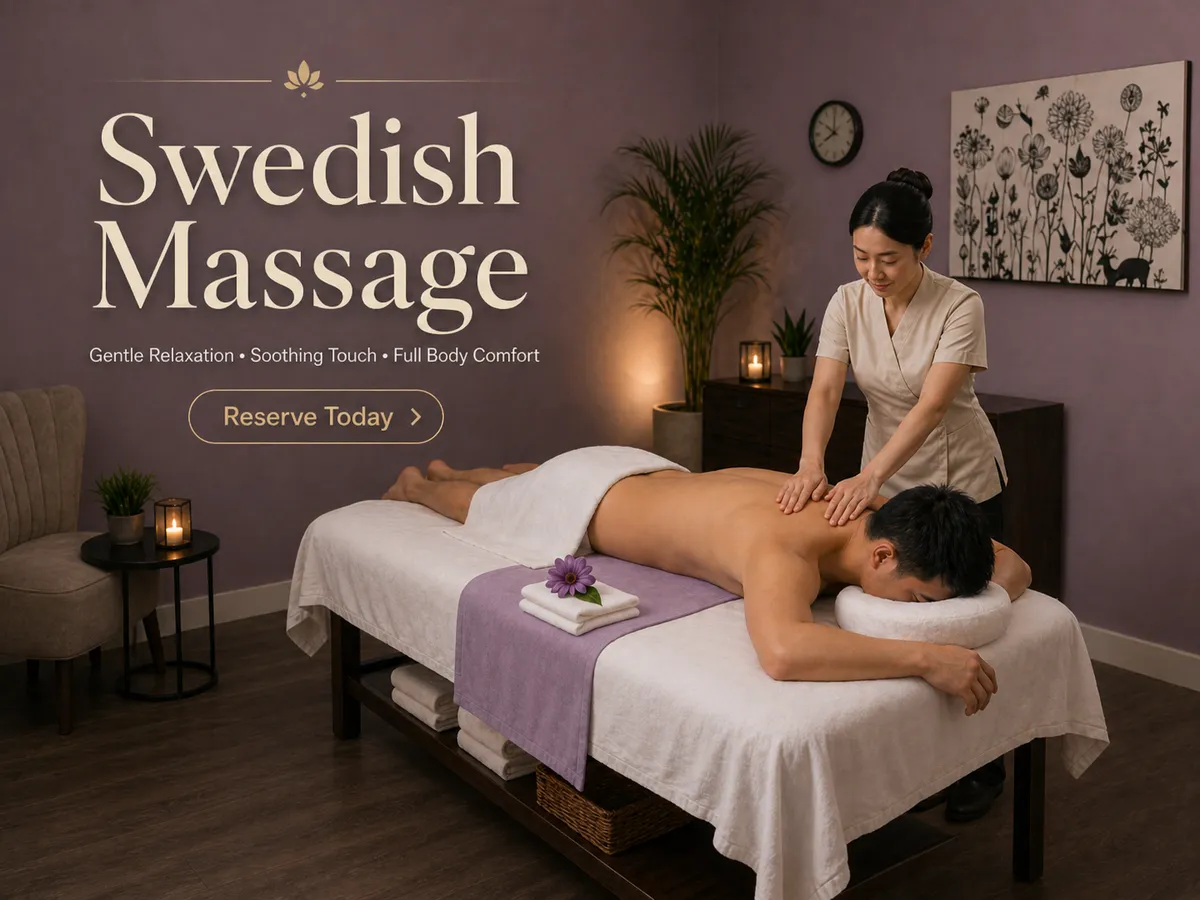
The two most-requested massage styles do completely different things. Here's how to choose between them.
The Core Difference
Swedish massage uses light to moderate pressure with smooth flowing strokes — it's designed for relaxation and surface tension release. Deep tissue uses firm, sustained pressure to access the deeper muscle layers — it's designed for chronic pain and structural muscle tension. Both are valuable; they answer different questions.
The most common confusion: clients think "deep tissue" just means "hard pressure." It doesn't. Deep tissue is a specific therapeutic technique focused on releasing the layers of muscle and fascia underneath the surface. Swedish, by contrast, focuses on the surface itself — gliding strokes, kneading, gentle friction along the muscle fibers.
When Swedish Is the Right Choice
Choose Swedish if: you're a first-time massage client, you want pure relaxation, you have mild stress-related muscle tension, you're looking for stress relief or insomnia help, or you simply want to switch off completely. Pressure stays light to moderate; the rhythm is smooth and continuous.
Swedish is also excellent for: pregnancy massage (with appropriate modifications), recovery on rest days for athletes who don't need deep work, and as an introduction to massage for clients who haven't had one before.
When Deep Tissue Is the Right Choice
Choose deep tissue if: you have chronic muscle tension (neck, lower back, shoulders), you've been dealing with a specific pain for weeks or months, you've tried massage before and felt the pressure wasn't deep enough, or you're recovering from athletic strain. Pressure is firm and sustained.
Deep tissue is also the right choice for: post-injury recovery (after physician clearance), frozen shoulder rehabilitation, sciatica management, and chronic conditions that haven't responded to other treatment.
The Common Mistake: Booking Wrong
The most common mistake we see: clients with chronic pain booking Swedish (because they're nervous about deep tissue) and walking away disappointed that their pain wasn't addressed. Or clients who want pure relaxation booking deep tissue and feeling sore afterward. Match the technique to the goal.
If you're nervous about deep tissue: book a 60-minute session, tell your therapist what's bothering you, and ask them to start lighter and gradually increase pressure. A skilled therapist will adjust to your tolerance — you don't have to push through pain to get the benefits.
Can You Combine Both?
Yes. Many sessions blend the two — starting with Swedish-style warming and finishing with deep tissue work on specific areas. If you're not sure what you need, request a 60-minute session and tell your therapist you want "general relaxation with focused deep work on [specific area]." Most experienced therapists are comfortable mixing techniques within a session.
What About Hot Stone, Shiatsu, Acupressure?
Hot Stone is closer to Swedish in feel — relaxation with depth from the heat. Shiatsu and Acupressure are firmer like deep tissue but use a different theoretical framework (meridian work vs muscle work). For chronic pain, the choice between deep tissue and acupressure often comes down to preference: Western or Eastern approach. Both are valid; both work.
Common Scenarios: Which Should You Book?
Theory is one thing; specific situations are another. Here are the most common scenarios our clients describe, and which technique we recommend.
"I've been working from home for 6 months and my neck is killing me." Deep Tissue. The chronic muscular pattern from desk work needs direct release work, not surface relaxation.
"I haven't had a massage in years and want to try one." Swedish. Start gentle, learn what your body responds to, build from there.
"My anxiety has been awful lately and I just need to switch off." Swedish, or Hot Stone if you want depth without firmer pressure.
"I have sciatica and the doctor said it's muscular." Deep Tissue. The piriformis and gluteal complex need direct work.
"I've been training for a marathon and my legs are wrecked." Deep Tissue, scheduled 24-72 hours after your hardest workout.
"My partner and I want to have a relaxing date." Couples Swedish. Shared experience, no recovery time afterward.
"I had a massage at a hotel spa and felt nothing." Try Deep Tissue with a therapist with 10+ years of experience. The "felt nothing" issue is usually pressure that wasn't actually deep, not a problem with massage in general.
"I want a luxury experience for my anniversary." Hot Stone, possibly with a 90-minute booking. The penetrating warmth makes it feel substantial without being intense.
"I'm pregnant and my back hurts." Pregnancy massage (modified Swedish) with side-lying positioning. After physician clearance.
Pressure Levels Explained
Massage pressure is often described in vague terms ("light," "medium," "firm") that mean different things to different people. Here's a more specific scale:
Level 1 — Light: Barely more pressure than a friendly touch. Used for very sensitive clients, certain pregnancy work, or specific lymphatic techniques. Most Swedish doesn't go this light.
Level 2 — Light-medium: Comfortable pressure that releases surface tension. Standard Swedish massage. Feels good but not therapeutic for chronic pain.
Level 3 — Medium: Engaging pressure that creates noticeable muscle warming. The bridge between Swedish and deep tissue.
Level 4 — Medium-firm: Pressure that actively reaches muscle tension. The starting point of deep tissue. Most clients new to deep tissue should start here.
Level 5 — Firm: Sustained deep pressure that releases chronic tension. The standard pressure for experienced deep tissue clients with specific therapeutic goals. Should feel intense but releasing — never stabbing.
Level 6 — Very firm: Maximum pressure for the deepest layers. Used selectively on specific points, not for entire sessions. Some experienced clients prefer this; most don't need it.
When you book, you can ask for a specific level. "Level 3-4" or "Swedish with some deep work in my upper back" are the kinds of specific requests skilled therapists love to receive.
Can Both Be Done in One Session?
Yes, and many sessions blend the two. The standard structure of a "blend" session:
Minutes 0-15: Swedish-style warming throughout the body. Sets the parasympathetic state. Identifies areas of held tension.
Minutes 15-45: Deep tissue work on the specific areas needing release. Pace slows; pressure deepens. Communication about specific points.
Minutes 45-60: Returns to Swedish-style finishing strokes. Smooths out the deep work. Returns the body to a relaxed state before the session ends.
This blend is what most clients actually want when they're not sure what to book. If you tell your therapist "general relaxation with some deep work in [area]," this is what you'll get.
Practical Logistics for Booking Your Session
For clients ready to act on what's described above, the practical mechanics of working with us:
Phone booking: 650-868-5088. Available all open hours (9am to 10pm, every day). The receptionist will take you through service selection, therapist matching, and scheduling. Most calls take 3-5 minutes.
Chat booking: Bottom right of any page on our website. Available 24/7. Useful when you have specific questions or want to describe a complex issue before committing to a session. Response time during open hours is usually under 5 minutes.
Same-day appointment: Sometimes possible. Our therapists are typically booked, but if there's an opening we can fit you in. Call ahead to check.
Same-day vs advance booking: Same-day works for most weekday slots. Friday evenings and weekend slots fill 2-3 days ahead. The most-requested therapists (Edman, Jack) often book a week ahead during busy periods.
What to bring: Nothing required. Comfortable clothes for arrival and departure. We provide everything else — sheets, oils, robes, water.
Your First 60 Seconds With the Therapist
The brief consultation at the start of every session is more important than most clients realize. The therapist is making rapid assessments based on what you tell them and what they observe. The clearer you are in those first 60 seconds, the more targeted the work will be.
The questions worth answering specifically:
- Where exactly is the issue? "My neck" is vague. "The right side of my upper trapezius, just above the shoulder blade" is specific.
- How long has it been there? "A week" requires a different approach than "three years."
- What aggravates it? Specific positions, specific activities, specific times of day.
- What relieves it (even temporarily)? This tells the therapist what kinds of input the body responds to.
- Anything to avoid? Recent injuries, areas of skin sensitivity, areas you don't want worked on for any reason.
- What's the goal? Pain relief? Relaxation? Recovery? The session shape changes based on which.
What Tells You the Session Worked
The honest indicators that a session was effective:
In the first hour after: A quiet, slightly slow feeling. Reluctance to immediately return to busy activity. Mild thirst.
That night: Better sleep. Falling asleep faster. Waking less. Sleeping through usual disruptions.
The next morning: Better range of motion than yesterday. The chronic pain or tension you came in with is at minimum reduced — often noticeably less.
Day 2: Possibly mild soreness if you had deep work, similar to the day after a workout. Drink water; it resolves quickly.
Day 3-5: The cumulative benefit. Many clients report feeling better than they did before the session — calmer, more flexible, sleeping better.
If you notice none of these in the days after a session, the work didn't fully connect with what your body needed. That's useful feedback. Tell us at your next appointment so we can adjust technique, therapist match, or both.
Why Consistency Matters More Than Intensity
If we could give one piece of advice to every client about therapeutic massage, it would be this: consistency dramatically outperforms intensity. Two 60-minute sessions per month for a year does more for chronic conditions than a single dramatic 120-minute session per quarter.
The body learns from repeated input. A consistent rhythm of moderate sessions teaches the nervous system and the tissue that release is the new normal. A rare, dramatic session creates a temporary peak that fades back to baseline.
This is why we don't sell prepaid packages with expiration dates — we want clients booking when their bodies need it, not booking 10 sessions in 30 days because the package is expiring. The right rhythm is whatever you can sustain over time.
For most clients, that turns out to be every 2-3 weeks. For some, weekly. For others, monthly. The right answer is whatever you'll actually keep doing.
Ready to Book?
Read more on our blog or check out our complete guide to massage in Redwood City.
Call: 650-868-5088