Mountain View sits 12 miles south of Redwood City — about an 18-minute drive on US-101. As home to Google, LinkedIn, and dozens of major tech companies, Mountain View represents a substantial share of our weekly bookings — clients who deliberately drive past closer options to access the depth of therapeutic work our team provides.
Our Mountain View clients lean heavily tech: Google engineers, product managers from the surrounding cluster of major tech offices, startup founders, and senior leadership. Many work in roles where physical wellness is treated as a productivity investment — they book bi-weekly, plan ahead, and prioritize consistency.
Mountain View clients show a distinctive pattern from sedentary tech work compounded by stress: severe upper trapezius tension, chronic forward-head posture from screen work, lower back compression, and TMJ-related jaw tightness. Deep Tissue with focused acupressure work is the most-requested combination.
US-101 north is the standard route. Off-peak takes 15-18 minutes; peak commute (4-7 PM weekdays) can stretch to 25-30 minutes. Many Mountain View clients book early morning (10-11 AM) or late evening (after 7 PM) specifically to avoid the corridor traffic.
| Castro Street / Downtown | 17 minutes via US-101 North |
| Google campus / North Bayshore | 20 minutes via US-101 |
| Cuesta Park | 16 minutes via US-101 |
| Sylvan Park | 18 minutes via US-101 North |
We see clients from across Mountain View — including Castro Street, Old Mountain View, Shoreline West, North Bayshore, Cuesta Park, Sylvan Park. Tell us where you're coming from and we'll suggest the smoothest route.
For Mountain View tech workers with severe chronic tension, Edman (deep work + Eastern bodywork), Jack (joint and recovery focus), and Anna (strong deep pressure) are most-requested.
Not sure who to book? Tell us what's bothering you and we'll match you. Find your match by condition →
| Distance from Mountain View | 12 miles |
| Drive Time | 18 minutes via US-101 |
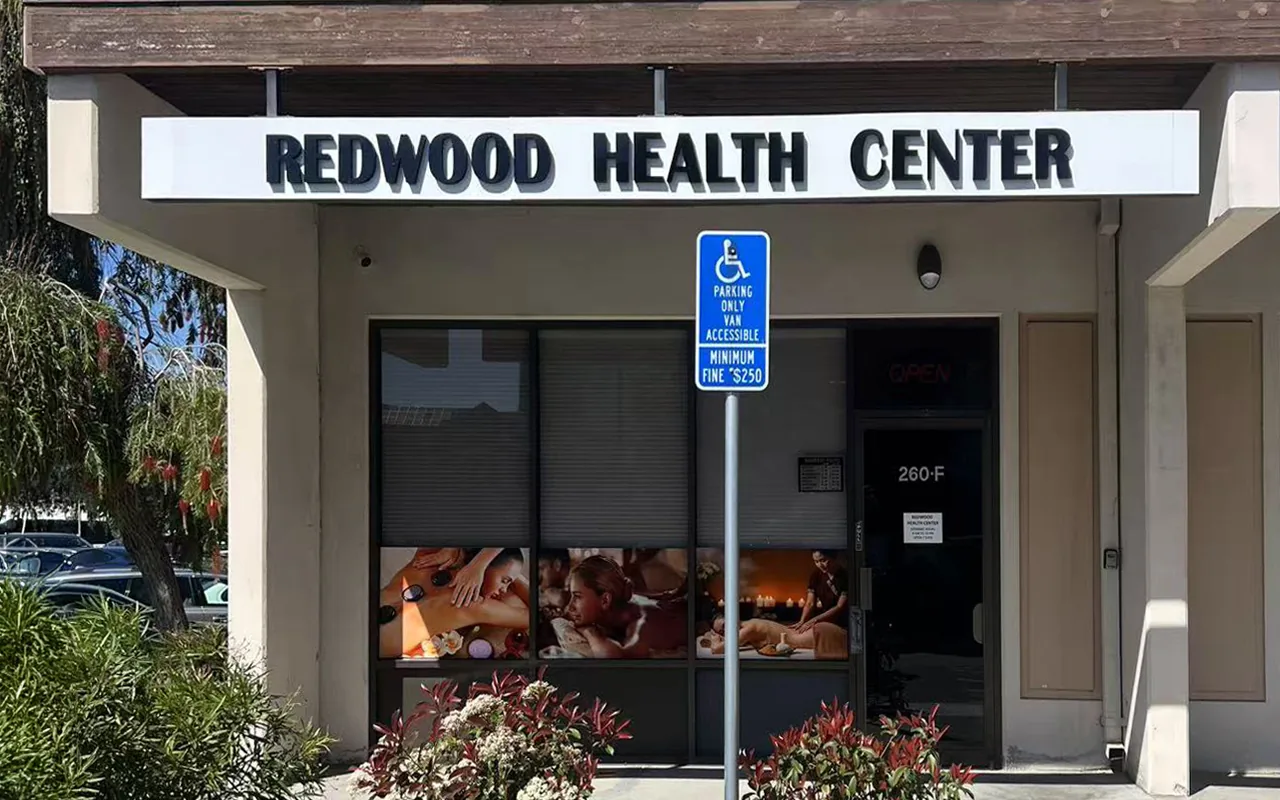
| Address | 260 Main St, Ste F, Redwood City, CA 94063 |
| Phone | 650-868-5088 |
| Hours | Open Daily · 9am – 10pm |
| Parking | Free on-site lot · ADA accessible |
12 miles via US-101 — about a 18 minutes drive.
The honest answer: most Mountain View clients who choose us are looking for therapeutic depth that closer options don't provide. Our team has 100+ years of combined experience, including therapists with formal Eastern bodywork training (Edman from Shanghai University of TCM, Jack with Chinese tuina background).
Yes. Same honest pricing: 60-min sessions from $59, 30-min from $39. Featured Combo Package $89. FREE 15-min hot stone with any service. No out-of-area surcharges.
Free on-site parking in our lot. ADA accessible. No metered street parking required.
12 miles drive · 18 minutes · Eight licensed therapists · Sessions from $59 · Open daily 9am–10pm
Call: 650-868-5088 Or chat with us on the bottom right →Mountain View has dozens of nearby massage options — chains, day spas, hotel spas, even on-campus massage at some of the larger tech companies. The fact that a meaningful share of our weekly bookings come from Mountain View clients who deliberately drive past these closer options tells us something specific about what they're looking for.
The honest answer from our regulars: closer options provide quick, surface-level work — adequate for general relaxation but inadequate for the specific patterns that develop in long-term tech professionals. The chronic upper trapezius tension, the forward-head posture, the TMJ-pattern jaw tightness, the lower back compression — these don't release with 60 minutes of light pressure. They need the depth and patience that comes from working with therapists who've practiced these specific patterns for decades.
Google employs many thousands of people across multiple Mountain View buildings. The daily working pattern — extended hours at standing desks (which paradoxically don't always help and can worsen lower back issues when used wrong), constant context switching, high cognitive load, and the cultural expectation of being responsive at all hours — creates a remarkably consistent body pattern across the demographic.
What we see most often from Google engineers and product managers: severe upper trapezius tension extending into the levator scapulae and rhomboids; chronic forward-head posture with associated suboccipital tension; lower back compression from sitting; jaw-and-temple tightness from extended focus; and surprisingly often, hand and forearm patterns from heavy keyboard use. The Featured Combo Package ($89) — Acupressure + Stretching + Deep Tissue Shiatsu — addresses the layered pattern more comprehensively than any single modality.
For Mountain View clients who don't want to deal with US-101 traffic, Caltrain is a genuine alternative. Mountain View Caltrain station to Redwood City station is about 22 minutes; from Redwood City station to our spa is a 10-minute walk. Total transit time about 32-35 minutes — slower than driving in optimal traffic but more reliable than driving during peak commute hours, and the train ride home doubles as decompression time after the session.
From our observation: Mountain View clients book farther in advance than other cities (often 1-2 weeks ahead), prefer evening slots (after 6 PM), and overwhelmingly choose bi-weekly rhythms once they settle in. The investment makes sense for them — high-stress work, valuable time, real wellness impact.
A few patterns specific to the tech work demographic that may apply to Mountain View clients:
Compression headaches. Often mistaken for migraines or tension headaches but actually originating from suboccipital muscle tension. Acupressure on the suboccipital region provides remarkable relief in clients who've been managing these for years.
RSI prevention. Repetitive strain patterns in the wrists, forearms, and hands from heavy keyboard use respond well to focused deep tissue and acupressure. Best as preventive maintenance — easier to manage before symptoms develop than after.
Vision-related neck strain. Hours of screen focus changes neck position. Specific work on the suboccipital and SCM muscles addresses this directly.